


Understanding Your Core & Pelvic Floor
A must-read for every new mum who wants to move her body safely
What Is Your Core, Really?
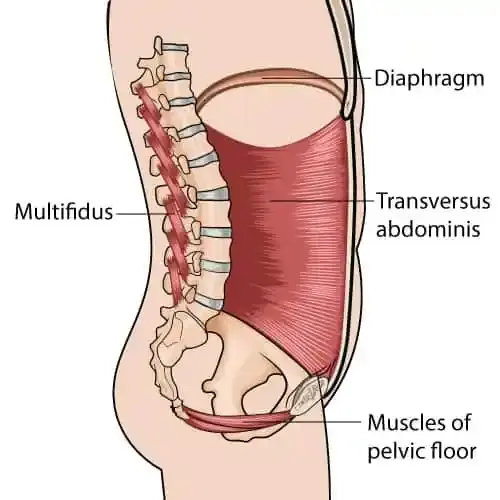
When we talk about the “core,” we’re not just talking about abs. Your core is a deep, stabilising system made up of the:
Diaphragm – your main breathing muscle at the base of your ribcage
Transverse Abdominis (TA) – your deepest abdominal muscle that wraps around your torso like a corset
Multifidus – small stabilising muscles along the spine
Pelvic Floor Muscles – a hammock of muscles at the base of your pelvis that support your bladder, bowel, and uterus
These four elements work together, creating pressure, stability, and movement. This coordinated system is often referred to as the core canister.

Layers of Your Abdominal Wall
There are four layers of abdominal muscles, each with a unique function:
Transverse Abdominis (TA) – Deepest layer. Stabilises your trunk and pelvis.
Internal Obliques – Rotate and side-bend the trunk; assist in spinal support.
External Obliques – More superficial; help with trunk rotation and flexion.
Rectus Abdominis – “Six-pack” muscle; allows you to flex forward (e.g. sit-ups).
How Your Core & Pelvic Floor Work Together
When you inhale, your diaphragm moves down, the pelvic floor lengthens, and your abdomen expands.
When you exhale, your diaphragm lifts, and your deep core and pelvic floor should return to its neutral relaxed state, or we can choose to lift and engage.
This connection can be interrupted during pregnancy, birth and postpartum due to:
Stretching of the abdominal wall and pelvic floor during pregnancy
Hormonal changes affecting tissue strength
C-section or vaginal birth trauma
Abdominal separation (diastasis recti) - Read more here
Posture changes
Changes in breathing patterns.
Feeling unfamiliar with movement and your changing body.
When this happens, you may experience leaking, back pain, pelvic heaviness, doming along the midline, and difficulty feeling strong and stable.

How to Build a Strong, Functional Core
1. Start With Breathwork
Diaphragmatic (360°) breathing reconnects the core and pelvic floor
Practice lying down or seated: inhale into your ribs, back, and belly
Exhale and gently engage your pelvic floor — imagine drawing a tampon up gently
On the next inhale, focus on relaxing and lengthening the pelvic floor once more.
2. Connect to Your Transverse Abdominis
Practice gentle core activations in laying or 4 point kneel positions
First continue with the 360 breathing, relaxing on inhale, gently engaging on the exhale.
Think of drawing your hip bones gently toward each other or pulling the skin away from your low rise underwear line.
No breath-holding, straining, or sucking in — aim for gentle and controlled
3. Layer In Functional Movements
Progress to movements like bridges, bird dogs, and heel slides
Focus on breath-timed engagement (exhale with effort)
Move with intention — keep your alignment and avoid bulging or doming
Pull back to a gentler option if you cannot maintain TA activation or pelvic floor awareness throughout entire movement.
4. Watch for Warning Signs
Bulging or doming through the midline
Leaking urine or heaviness in the pelvis
Pain during core work
These are signs your body may need more support or a step back
5. Avoid High-Impact or High-Intra-Abdominal Pressure During Pregnancy and Early On in Recovery
This includes crunches, planks, running, and heavy lifting
Build your foundation before adding load, speed, or impact
6. Seek Support From a Specialist
A women’s health physio can assess your pelvic floor and core. It's highly recommended to see one to ensure you are activating correctly and working at a level appropriate for your ability.
Research states that up to 60% of women may be doing their pelvic floor work wrong, bearing down instead of lifting up. This is why it's so important to see a professional to give us "eyes on the inside"
Postnatal exercise specialists (like Strong Starts) can support you to move safely and confidently

You Deserve to Feel Strong Again
Rebuilding your core isn’t about “getting your body back” — it’s about reclaiming
strength, control, and confidence in your body. You carried and birthed a baby. Now it's time to rebuild your foundation and support an active life as a mum — safely, purposefully, and powerfully.
If you need support to do so, check out our Postnatal Power Program HERE
Comments